
Key Words: Silicon Wafer Dicing PCB Depaneling Glass Cutting
Home > News > Industry News
【Description】:
Learn how ultrafast picosecond and UV laser ablation technology achieves micron-scale precision material removal in glass components without thermal damage or micro-cracks.
Laser ablation has become an essential technique for achieving micron‑scale features in glass—cutting, drilling, grooving, and structuring—with precision that mechanical methods cannot match. The challenge of glass laser ablation lies in the material itself: glass is transparent to many laser wavelengths, brittle under mechanical stress, and sensitive to thermal damage. Achieving clean, controlled ablation at the micron scale requires a deep understanding of laser‑matter interactions and careful selection of processing parameters.
The laser ablation of glass is governed by the interaction between the laser pulse and the material. The mechanism—and therefore the quality of the cut—depends on the wavelength, pulse duration, and energy density of the laser.
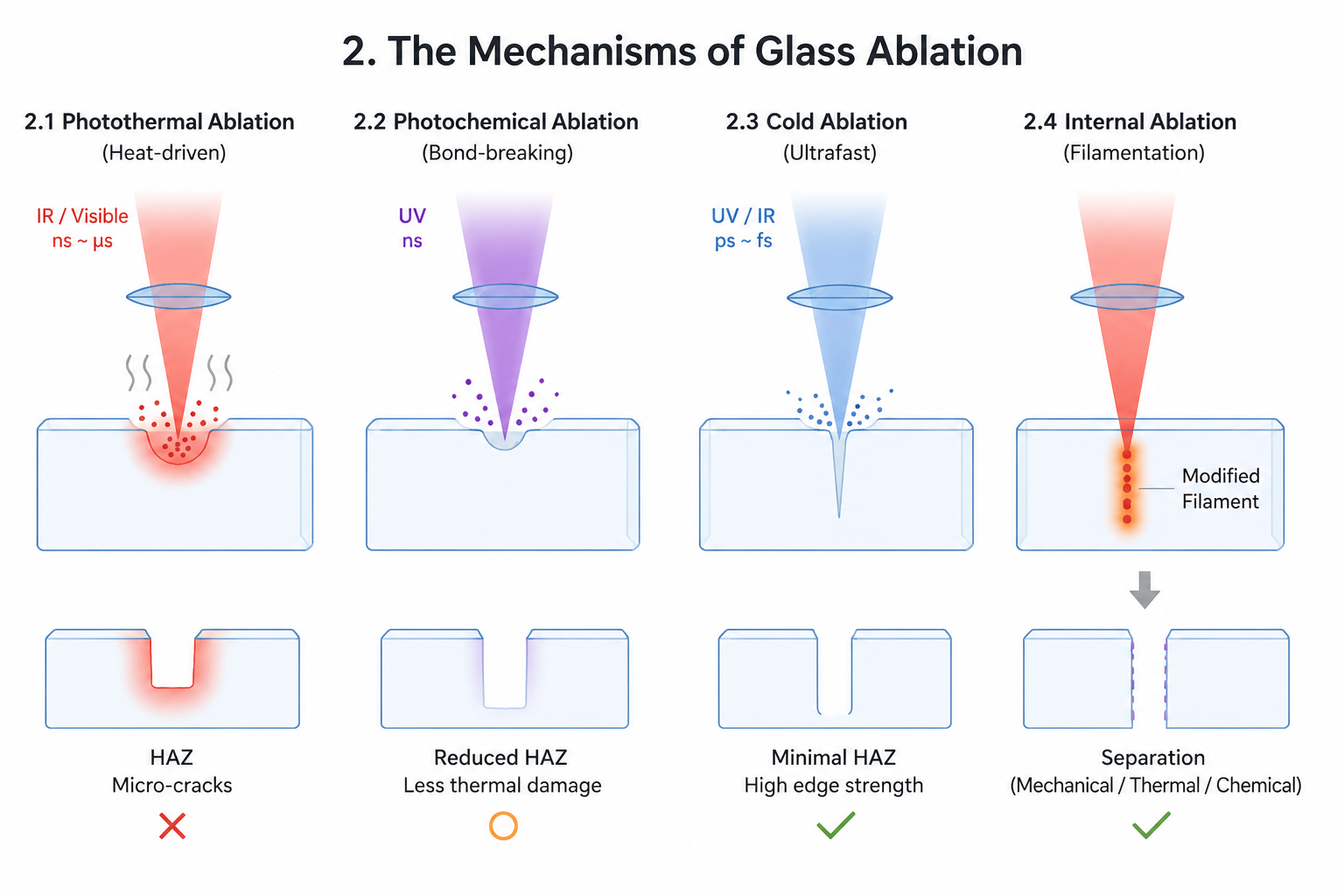
In photothermal ablation, the laser energy is converted to heat, which melts and vaporises the material. While effective for removing material, it creates a measurable heat‑affected zone with thermal stress that can lead to micro‑cracks.
With UV wavelengths, laser photons have enough energy to break molecular bonds directly through photodissociation, reducing the thermal load and resulting in cleaner edges.
With picosecond or femtosecond pulses, energy is deposited faster than heat diffuses. The material transitions directly from solid to plasma—a process known as cold ablation, which eliminates micro‑cracks and keeps the heat‑affected zone under two micrometres.
Focusing high peak power inside the glass creates nonlinear absorption and localised plasma (glass filamentation). This internal modification is ideal for thick glass and curved profiles.
Several inherent properties of glass make precision laser ablation challenging:
Transparency: Glass passes visible and infrared light with minimal absorption, rendering standard IR fiber lasers ineffective.
Brittleness: Glass does not deform plastically; uncontrolled thermal or mechanical stress easily causes cracking.
Low Thermal Conductivity: Localised heating creates steep temperature gradients that induce severe thermal stress.
Thermal Sensitivity: Heat can compromise optical clarity, structural integrity, and the compressive surface layer of chemically strengthened glass.
UV picosecond lasers meet all these critical requirements, making them the industry standard for precision glass processing.
UV wavelengths at 355 nanometres are strongly absorbed by most glasses, allowing tighter focusing for higher precision and smaller kerf widths.
With picosecond pulses, the heat‑affected zone shrinks to less than two micrometres, yielding superior edge quality compared to nanosecond processing.
Operating fluence just above the ablation threshold removes material with minimal energy, preventing micro‑cracks, thermal damage, and edge chipping.
A high‑quality beam with M² < 1.3 can focus to a spot size of 15 to 25 micrometres, enabling fine detail and narrow kerf widths.
An overlap rate of 60 to 80 percent is typical to achieve smooth, continuous cut edges without scalloping.
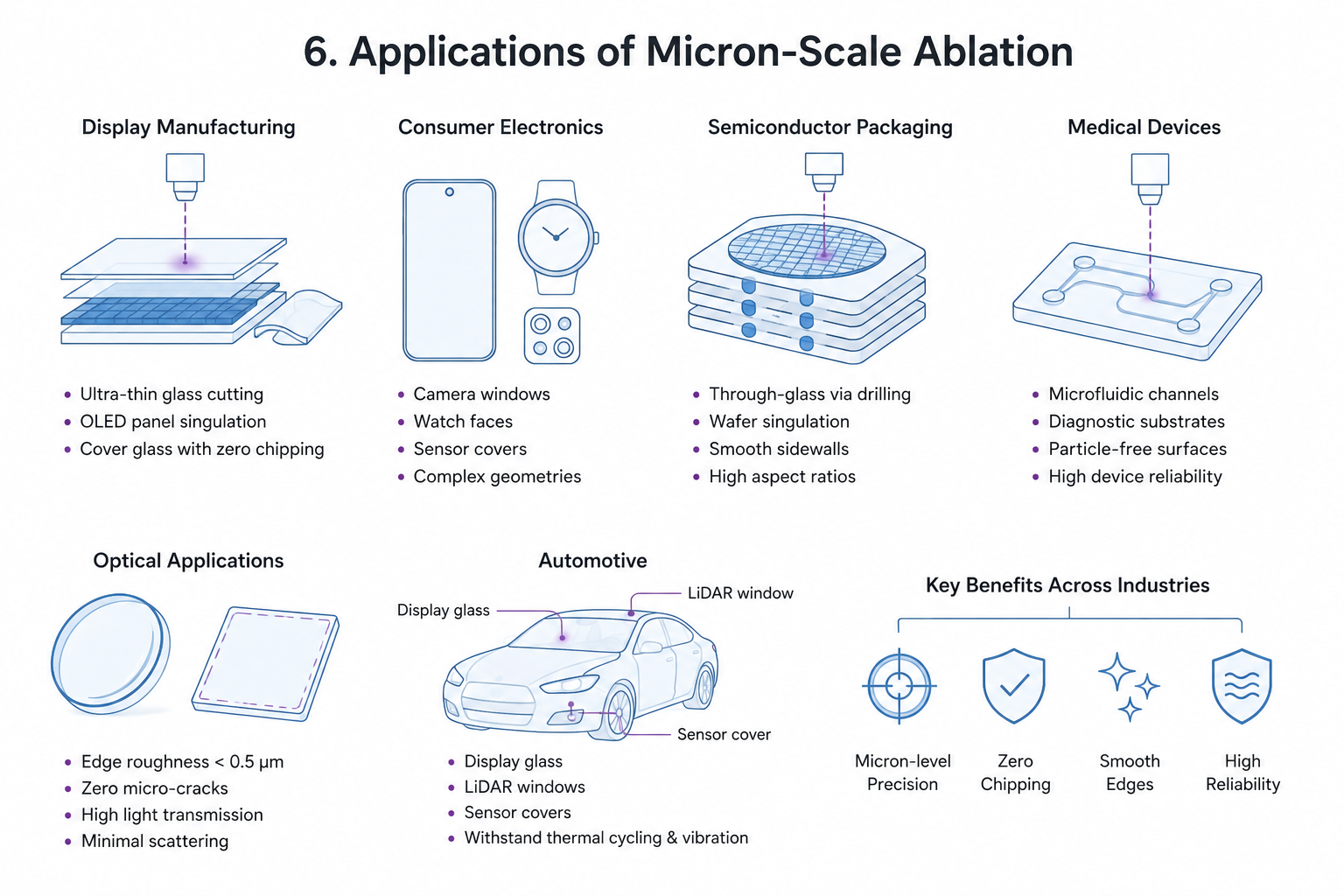
Standard quality requirements include edge roughness below 0.5 micrometres, complete elimination of micro-cracks (which can weaken edges by up to 80%), zero edge chipping, and a heat‑affected zone of under two micrometres.
Micron-scale laser ablation is widely used in display manufacturing (foldable UTG, OLED singulation), consumer electronics (camera modules, watch crystals), semiconductor packaging (through-glass vias, wafer dicing), medical microfluidic devices, optical components, and automotive displays/sensors.
Achieving repeatable micron‑scale results in high‑volume industrial production requires a complete integrated system. Integrated laser processing systems combine stable motion platforms, optics, dynamic focusing, and debris management to ensure performance consistency.
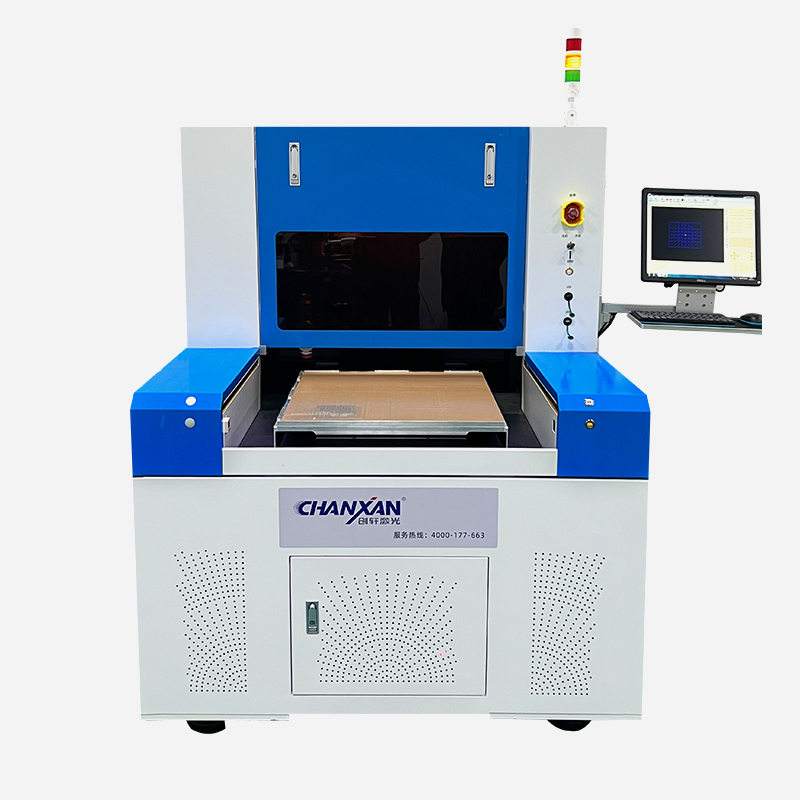
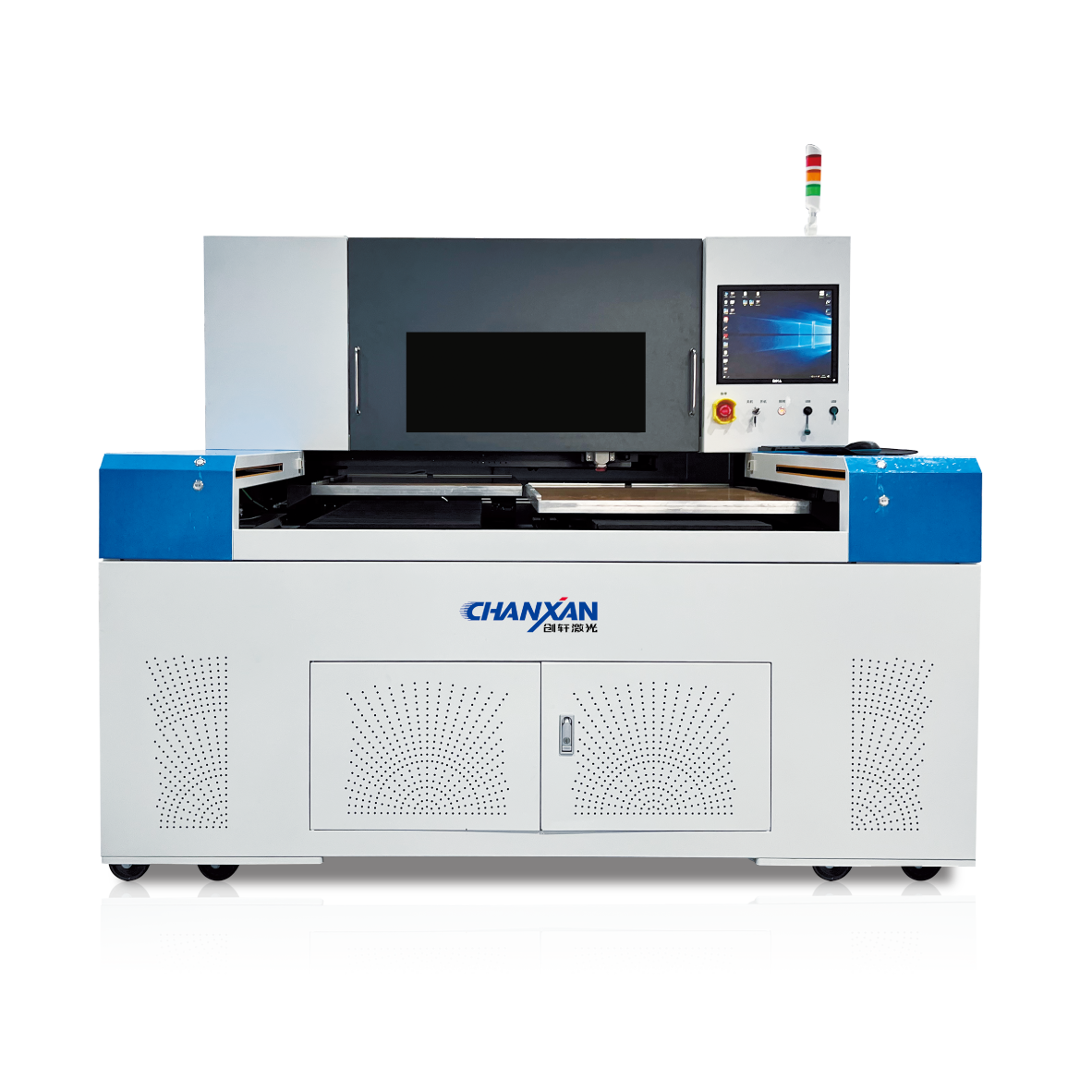
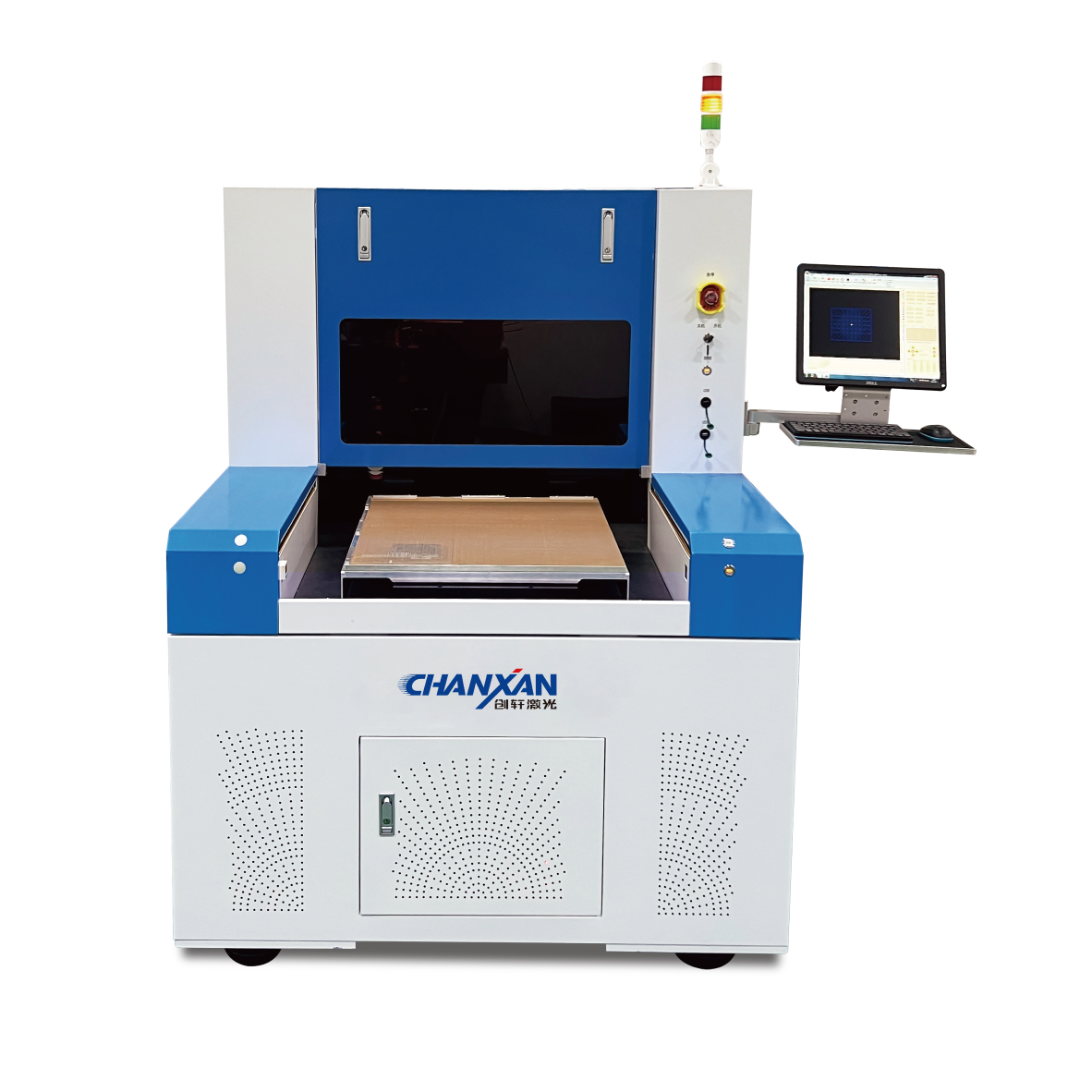
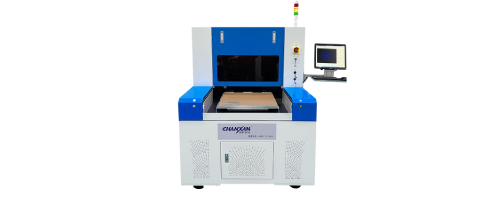
Chanxan Laser's Picosecond Laser System integrates a 355-nanometre picosecond source with a granite-based motion platform, linear motor drives, and dynamic focus tracking—delivering unmatched cold ablation performance for advanced glass applications.
Discover how Chanxan Laser's advanced picosecond systems can transform your production quality and throughput.
Contact Us to Get a Quote| Free solution
Previous: Laser Parameters for Precision Glass Cutting – A Technical Guide to Process Optimisation
Next: Laser Filamentation in Glass Cutting – A Complete Technical Guide